Community Solar vs Rooftop Solar: What's the Difference?
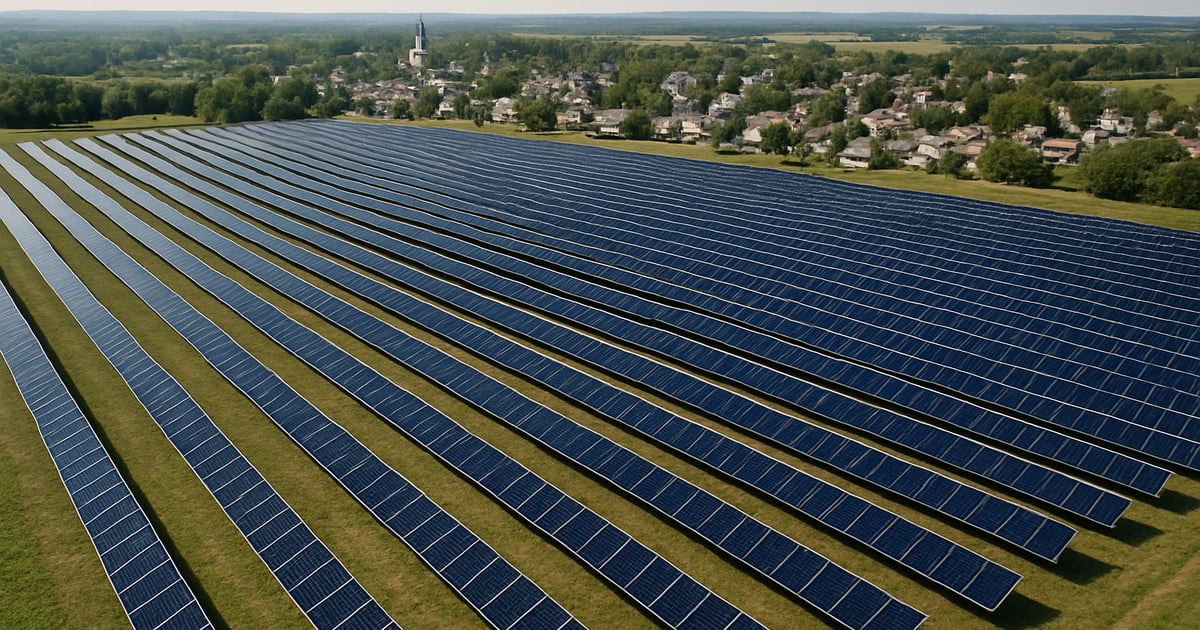
Community solar and rooftop solar both let you benefit from solar energy, but they work in fundamentally different ways — one involves installing panels on your own roof, the other lets you subscribe to a share of a larger, offsite solar farm.
How rooftop solar works
You have panels installed directly on your own roof, sized to your usage, and you either own the system (via cash or loan) or lease it. Your utility bill is reduced through net metering credits for the electricity your own panels generate.
How community solar works
You subscribe to a share of a larger solar installation located elsewhere — often a solar farm serving many subscribers in your utility territory. You receive bill credits proportional to your share of that installation’s output, without installing anything on your own property.
Key differences
| Factor | Rooftop Solar | Community Solar |
|---|---|---|
| Requires owning your roof | Yes | No |
| Upfront cost | Can be significant (or $0 with lease) | Usually $0 |
| State incentives & SRECs | Yours, if you own the system | Generally no, for typical subscriptions |
| Savings potential | Generally higher | Generally more modest |
| Maintenance responsibility | Yours (if owned) | None — handled by the farm operator |
| Availability | Nearly universal (suitable roofs) | Limited to states/utilities with programs |
Who rooftop solar makes more sense for
- Homeowners with a suitable roof — good sun exposure, structural condition, and orientation (see our is my roof right for solar guide)
- Those who want to maximize long-term savings and capture their state’s ownership incentives
- Those planning to stay in their home long enough to benefit from the payback period
Who community solar makes more sense for
- Renters, who don’t own their roof and can’t install a rooftop system
- Homeowners with heavily shaded or poorly oriented roofs unsuitable for solar
- Those who want simplicity with no installation, maintenance, or long-term contract tied to their specific property
- Those in states where community solar programs exist but who aren’t ready for a full rooftop commitment
A note on savings expectations
Community solar subscriptions typically offer more modest savings than owning a rooftop system outright, since you’re paying a subscription fee against your bill credit rather than owning the generating asset yourself. It’s still often a genuine net savings, but usually smaller in percentage terms than a well-sized owned rooftop system would produce over time.
Bottom line
Rooftop solar generally offers greater long-term savings and is available almost everywhere a home has decent roof conditions, while community solar opens the door to renters, shaded homes, and anyone who wants a lower-commitment way to support and benefit from solar — check your specific state and utility to see which options are actually available where you live.
Frequently Asked Questions
- Is community solar available everywhere?
- No — availability depends on state policy and whether local programs exist, and it varies significantly by state and utility. Check with your utility or your state energy office to see what's actually offered in your specific area.
- Do I still need to deal with my utility if I join community solar?
- Yes, typically. You usually remain a regular utility customer for your electricity delivery, but receive bill credits from your community solar subscription that offset a portion of your usage, rather than replacing your utility relationship entirely.
- Can renters use community solar?
- Often yes — this is one of the main advantages of community solar, since it doesn't require owning your roof or your home at all, making it accessible to renters and apartment dwellers who couldn't install their own rooftop system.