Solar Battery Storage: Do You Actually Need One?
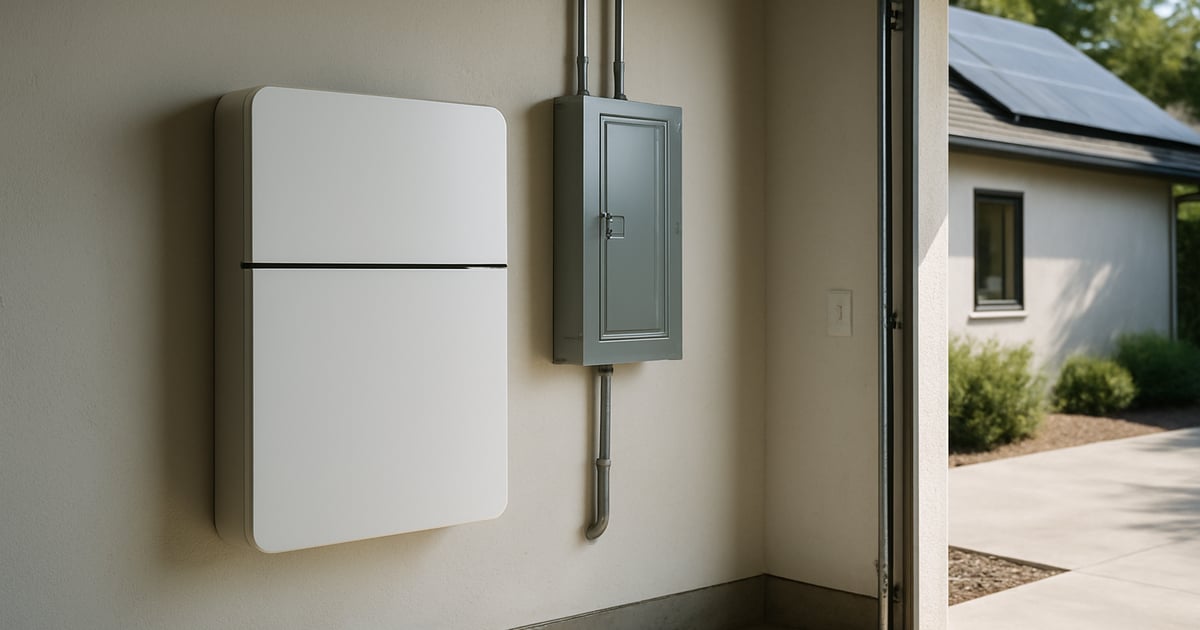
Battery storage is one of the biggest optional additions to a solar system — and one of the most genuinely situational. Here’s how to think about whether it makes sense for your home.
What a solar battery actually does
A battery stores excess electricity your panels produce (typically during the day) so you can use it later — most commonly at night, during a power outage, or during hours when your utility’s time-of-use rates make grid electricity more expensive. Without a battery, excess daytime production either offsets your bill through net metering or, in an off-grid system, simply goes unused if there’s nowhere to store it.
The main reasons homeowners add a battery
Backup power during outages
This is the most common motivation. A battery lets some or all of your home keep running during a grid outage, which matters more in areas prone to storms, wildfire-related shutoffs, or an aging grid with frequent outages.
Maximizing self-use under unfavorable net metering
In states with net billing or other less favorable export compensation (see our net metering explainer), storing your own excess production for later use can be worth more than exporting it to the grid at a low compensation rate.
Time-of-use rate arbitrage
If your utility charges more for electricity during certain hours, a battery lets you use stored solar power during those expensive hours instead of buying from the grid at the higher rate.
Preparing for future EV charging or increased usage
Some homeowners size a battery with future usage growth in mind, though this is more of a planning decision than an immediate financial one.
What it typically costs
Adding battery storage is one of the larger optional cost additions to a solar system, commonly adding a meaningful percentage on top of a panels-only system cost, depending on battery capacity and brand. Ask for battery pricing as a clearly separated line item on your quote so you can evaluate whether it’s worth it for your specific situation, separate from your core panel system decision.
When a battery is probably worth it
- You experience frequent or extended power outages in your area
- Your state’s net metering policy compensates exports poorly, making self-storage more valuable than exporting
- Your utility has meaningful time-of-use rate differences you could take advantage of
- Backup power for medical equipment or other critical needs is a priority regardless of pure financial payback
When a battery is probably not worth it yet
- You have full retail net metering, where exporting excess production is already compensated at full value
- You rarely experience outages and don’t have a specific backup power need
- Your budget is tight and adding a battery would meaningfully delay your solar payback for benefits you may not use often
How to decide
- Get a solar-only quote and a solar-plus-battery quote separately, so you can see the actual cost difference rather than a bundled number.
- Check your state’s net metering policy — the worse the export compensation, the more a battery’s self-storage value increases.
- Think honestly about how often you actually lose power and how much backup capacity you’d realistically want during an outage.
- Compare against your other options in our solar-only vs solar-plus-battery comparison.
Bottom line
A battery isn’t a default “yes” or “no” — it’s a genuinely situational add-on that depends on your local grid reliability, your net metering policy, and how much you value backup power specifically. Get the cost broken out separately on your quote and make the decision on its own merits rather than assuming it’s an automatic part of “going solar.”
Frequently Asked Questions
- Does a solar battery let my home run entirely off-grid?
- It can, if sized and designed for that purpose, but most residential batteries paired with solar are sized to provide backup power for essential circuits during an outage or to shift usage timing, not to fully replace grid connection. True off-grid systems require more careful capacity planning — see our grid-tied vs off-grid guide.
- Do I need a battery to get the tax credit on my battery specifically?
- The federal residential tax credit that covered batteries ended December 31, 2025, so purchases in 2026 get no federal credit. What remains are state and utility battery programs — California's SGIP rebates, Duke Energy's PowerPair in North Carolina, and Massachusetts SMART's battery adder are current examples — plus utility programs that pay for grid access to your battery. Check your state guide and utility before assuming any incentive.
- How long does a solar battery last during a power outage?
- This depends entirely on battery capacity, what you have it powering, and whether your solar panels are still producing during the outage (daytime) to help recharge it. A battery sized for a few essential circuits can often last a day or more per full charge for critical loads like refrigeration and some lighting; running a whole house including AC and major appliances draws it down much faster.