The Solar Panel Installation Process, Step by Step
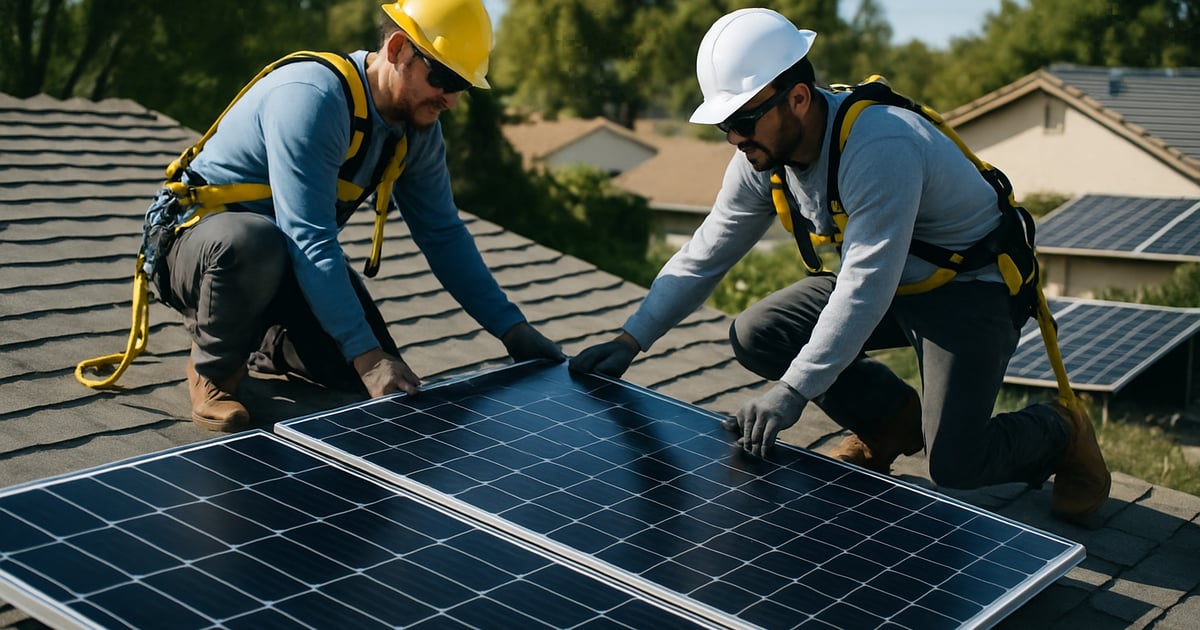
The physical installation of solar panels is often the fastest part of the entire process — most of the timeline is administrative. Here’s what actually happens at each stage.
1. Site assessment and system design
After your initial quote, a more detailed site assessment (sometimes remote via satellite imagery, sometimes in-person) confirms roof measurements, shading, and structural details, and finalizes your system design — see our roof suitability guide for what this typically covers.
2. Contract signing and financing finalization
Once you approve the final design and pricing, you sign the installation contract and finalize your chosen financing method — cash, loan, lease, or PPA.
3. Permitting
Your installer submits permit applications to your local building department, covering the electrical work and structural aspects of the installation. This step’s timeline varies significantly by municipality — some jurisdictions have streamlined solar-specific permitting, while others treat it like any other construction permit with longer review times. See our permitting guide for more detail.
4. Equipment ordering and scheduling
Once permits are approved, your installer orders the specific panels, inverters, and racking hardware for your project and schedules your installation crew.
5. Physical installation
This is usually the fastest step — a typical residential system is often installed in one to a few days, depending on system size and roof complexity. The crew installs the racking, mounts the panels, wires them to the inverter(s), and connects the system to your electrical panel.
6. Inspection
After installation, a local building inspector typically reviews the completed work to confirm it meets electrical and structural code before the system can be activated. See our permitting and inspection guide for what inspectors commonly check.
7. Utility interconnection approval
Your utility needs to approve the system’s connection to the grid, which typically involves installing or reprogramming your utility meter to handle two-way flow (for net metering) and confirming the system meets their interconnection standards. This step can take anywhere from a few days to several weeks depending on your utility’s process.
8. System activation (“Permission to Operate”)
Once your utility grants final approval — often called “Permission to Operate” (PTO) — your installer can formally activate the system, and you can start generating and using solar electricity.
Why the timeline varies so much between projects
- Local permitting speed, which depends on your municipality’s process and current workload
- Utility interconnection speed, which similarly depends on your specific utility’s process and queue
- System complexity, with larger or more complex systems sometimes requiring additional review
- Time of year, since permitting offices and installers both tend to have busier and slower seasons
What you can do to keep things moving
- Respond quickly to any requests for information from your installer, permitting office, or utility.
- Ask your installer for a realistic timeline estimate specific to your local permitting and utility process, not just a generic industry average.
- Confirm what’s included in your contract regarding timeline — some contracts include provisions related to delays outside the installer’s control.
Bottom line
The actual panel installation is often the quickest part of “getting solar” — the surrounding administrative steps (permitting, inspection, utility approval) typically take longer and are largely outside your installer’s direct control. A realistic expectation for the full process, from contract to activation, is usually measured in weeks to a few months rather than days.
Frequently Asked Questions
- How long does the whole solar installation process take?
- From signed contract to system activation, the full process — including design, permitting, and utility interconnection — commonly takes several weeks to a few months, with permitting and utility approval often taking longer than the physical installation itself, which is frequently completed in just one to a few days.
- Do I need to be home during the actual panel installation?
- Not necessarily for the entire process, though most installers want someone available at the start to confirm access and answer questions, and it's reasonable to be present for the final walkthrough and system activation to understand your new equipment and monitoring app.
- Why does permitting take so long compared to the actual installation?
- Permitting and utility interconnection approval involve third parties — your local building department and your utility — reviewing paperwork on their own timelines, which your installer doesn't fully control. This is normal and not usually a sign of a problem with your specific project.