Solar Panel Maintenance and Cleaning: What Actually Matters
Solar panels have no moving parts, which makes them relatively low-maintenance compared to most home systems — but “low-maintenance” isn’t the same as “zero-maintenance.” Here’s what’s actually worth doing.
Does dirt on panels really matter?
Yes, to a degree, but often less than people assume. Dust, pollen, and light dirt buildup can reduce output somewhat, but rain typically washes away much of this naturally in most climates. The exception is drier regions with infrequent rain, or after specific events like wildfire ash or heavy pollen season, where visible buildup can meaningfully reduce production until it’s cleaned or rained away.
When cleaning is worth doing
- Dry climates with infrequent rain, where dust accumulates over longer periods without natural washing
- After specific pollution or ash events, like wildfire smoke settling on panels
- Bird droppings or debris concentrated in specific spots, which can create localized shading on individual cells
- Noticeable production decline in your monitoring app that doesn’t recover after a normal rain
When cleaning probably isn’t worth the effort or cost
- Regular rainfall climates, where natural rinsing keeps panels reasonably clean most of the year
- Steep or hard-to-access roofs, where the safety risk and cost of professional cleaning may outweigh a modest production gain
- Very minor, uniform dust that isn’t showing up as a meaningful dip in your monitoring data
How to clean panels safely, if you choose to
- Check your manufacturer’s guidance first — some warranties have specific cleaning instructions or restrictions.
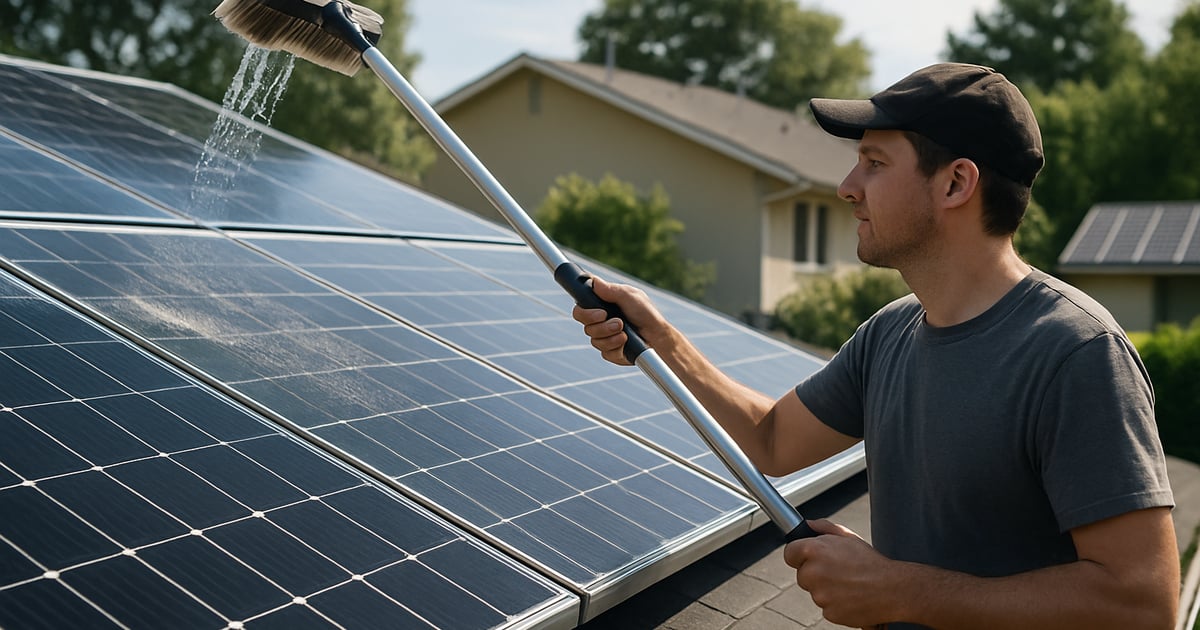
- Use plain water and a soft brush or squeegee — avoid abrasive materials or harsh chemicals that could scratch the panel surface.
- Clean during cooler parts of the day, since spraying cold water on hot panels can cause thermal stress.
- Never walk directly on panels, and only attempt this yourself if your roof is safely and easily accessible — otherwise, hire a professional solar cleaning service.
Monitoring: the maintenance task that actually matters most
Most modern systems include a monitoring app showing daily, monthly, and sometimes panel-level production data. Checking this periodically is arguably more valuable than physical cleaning, since it’s how you’ll actually catch a real problem — like a failed panel, a wiring issue, or new shading from a growing tree — early, before it causes significant lost production over time.
Other maintenance considerations
- Vegetation management. Trim trees that are starting to shade panels that were previously unshaded, since new shading is one of the more common causes of unexpected production decline over time.
- Roof and racking inspection. Occasionally check (or have your installer check during a service visit) that racking hardware remains secure, especially after severe storms.
- Inverter monitoring. Since inverters have a shorter typical lifespan than panels (see our lifespan guide), keep an eye on inverter-specific alerts in your monitoring app, which often signal when the unit needs service or replacement.
When to call a professional
- A sudden, significant production drop that doesn’t correspond to weather or season
- Visible physical damage to panels, racking, or wiring after a storm
- Error codes or persistent alerts in your monitoring app
- Any electrical issue — this is not a DIY area for safety reasons
Bottom line
Solar panels genuinely require minimal hands-on maintenance for most homeowners, with natural rain handling most cleaning needs in typical climates. The habit that actually protects your investment most is periodically checking your production monitoring data, which catches real problems far earlier than a visual inspection from the ground ever could.
Frequently Asked Questions
- Do I need to clean my solar panels regularly?
- For most homeowners in areas with regular rainfall, natural rain does a reasonable job of keeping panels functionally clean, and dedicated cleaning is often unnecessary except in dustier or drier climates, or after specific events like wildfire smoke or heavy pollen season.
- Can I clean my own solar panels, or do I need a professional?
- Light cleaning with water and a soft brush or squeegee on an accessible, safely reachable roof is something many homeowners can do themselves, but if your roof is steep or hard to access safely, hiring a professional cleaning service is the safer choice.
- How do I know if my panels have a real problem versus just dust?
- A gradual, small decline that recovers somewhat after rain is typically just normal dust or pollen buildup. A sudden, significant drop in production that doesn't recover is worth investigating through your monitoring app or by contacting your installer, since it could indicate equipment issues, new shading, or a wiring problem.