Solar Panel Warranties Explained: What's Actually Covered
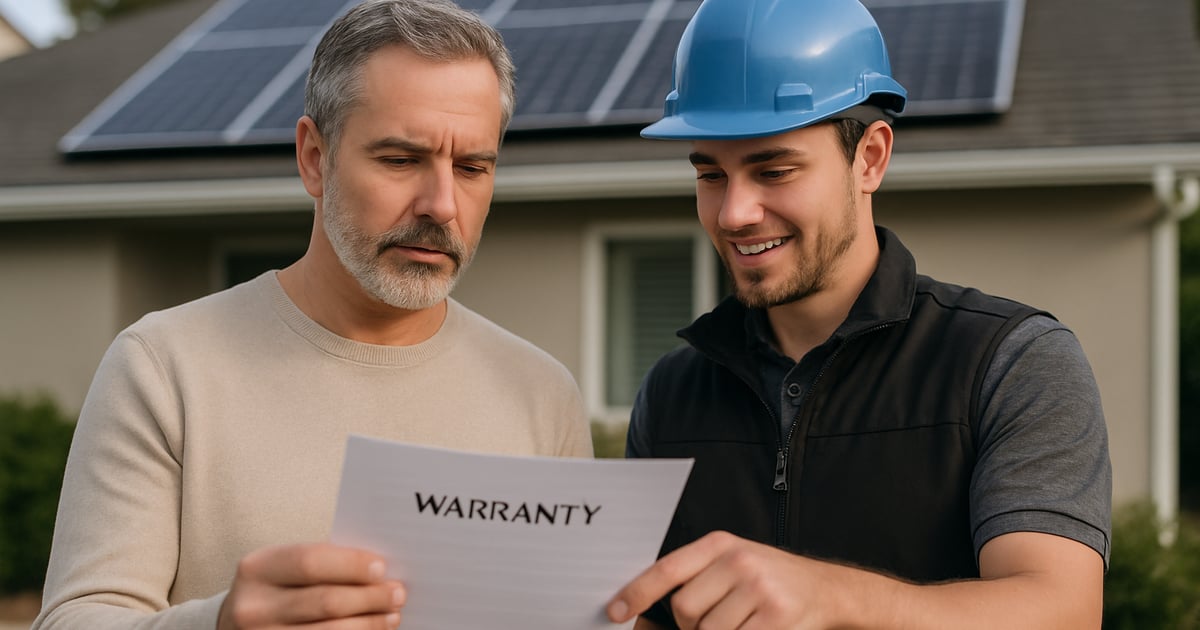
Solar warranties are more layered than most people expect — three separate warranties from different parties, each covering something different. Here’s how to make sense of them.
The three types of solar warranties
Performance warranty
Guarantees the panel will maintain at least a specified percentage of its original rated output after a set period — commonly structured around a 25-year timeframe, guaranteeing something in the range of 80-90% of original output by that point. This is issued by the panel manufacturer and covers gradual output decline, not sudden failure. See our panel lifespan guide for how degradation actually works.
Product (equipment) warranty
Covers manufacturing defects in the physical panel or inverter — issues unrelated to normal gradual degradation, like a defective component failing outright. This is typically shorter than the performance warranty, sometimes in the 10-15 year range for panels, and separately specified for inverters, which often have their own distinct warranty terms.
Workmanship warranty
Covers the quality of the actual installation — mounting, wiring, roof penetration sealing, and other work performed by your specific installer, separate from the equipment itself. This warranty is issued by your installer, not the manufacturer, which matters for the reasons covered below.
Why the workmanship warranty is the one to scrutinize most
Manufacturer warranties (performance and product) are backed by companies that are typically larger and more established than a local or regional installer, and remain in effect regardless of what happens to the specific company that installed your system. The workmanship warranty, however, is only as good as your installer’s continued existence — if the company goes out of business, that specific warranty generally becomes difficult or impossible to enforce, even though the equipment’s manufacturer warranties remain valid with a different installer’s help.
This is one of the reasons installer track record and financial stability matter when choosing an installer, not just their quoted price.
Questions to ask before signing
- What is the specific performance warranty percentage and duration for the panels being quoted?
- What is the product warranty duration for both panels and inverters — note these are sometimes different lengths.
- What is the workmanship warranty duration, and is it transferable if you sell your home?
- How does the claims process actually work — do you contact the installer, the manufacturer, or both?
- What isn’t covered — ask specifically about exclusions like storm damage, since some warranties exclude weather events that your homeowner’s insurance might cover instead.
How warranty length affects your financial calculations
A longer, more comprehensive warranty reduces your risk of unexpected out-of-pocket repair costs during your system’s useful life, which is part of the overall value proposition beyond the headline price — worth weighing alongside your estimated payback period when comparing quotes from different installers.
A note on transferability
If you’re considering financing options or thinking about a future home sale, ask specifically whether warranties (especially the workmanship warranty) transfer to a new homeowner — this can be a meaningful selling point and is worth confirming in writing rather than assuming.
Bottom line
Don’t evaluate a solar quote on price alone — ask for the specific performance, product, and workmanship warranty terms in writing, and factor installer stability into your decision, since the workmanship warranty is only as durable as the company standing behind it.
Frequently Asked Questions
- How many different warranties come with a solar system?
- Typically three separate warranties apply: a performance warranty (covering output degradation) and a product warranty (covering equipment defects) from the panel and inverter manufacturers, plus a workmanship warranty from your installer covering the quality of the installation itself. These often have different lengths, which is important to check individually.
- What happens to my warranty if my installer goes out of business?
- Manufacturer warranties (performance and product) typically remain valid since they're backed by the panel or inverter manufacturer, not the installer — though you may need to find a different installer to perform any warranty service. The installer's own workmanship warranty, however, generally becomes difficult or impossible to enforce if that specific company closes, which is worth considering when evaluating installer stability.
- Are longer warranties always better?
- Generally yes, all else being equal, but compare what's actually covered, not just the number of years — a long warranty with narrow coverage or a difficult claims process may be worth less in practice than a shorter warranty with clear, comprehensive terms and a manufacturer known for honoring claims.