Solar Panels vs Solar Shingles: Which Makes More Sense?
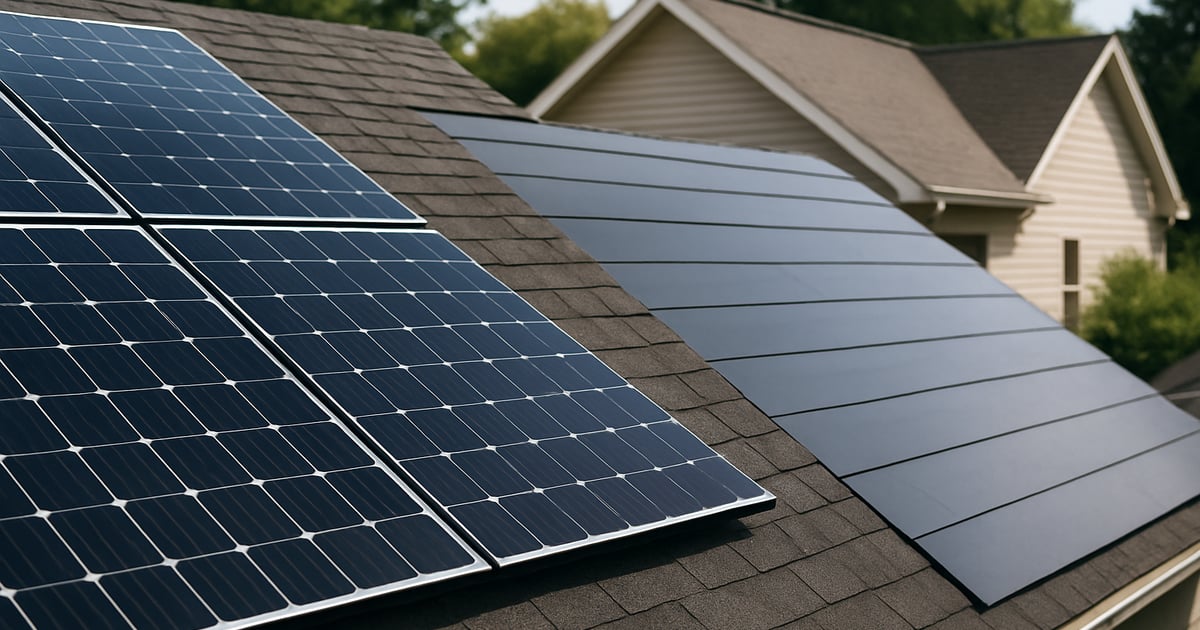
Solar shingles are a less common but increasingly available alternative to traditional rooftop panels, designed to look like a regular roof while generating electricity. Here’s how the two options actually compare.
What traditional solar panels are
Standard rack-mounted panels installed on top of your existing roof structure, the approach used in the vast majority of residential solar installations. They’re visibly distinct from the roof itself.
What solar shingles are
Solar shingles (also called building-integrated photovoltaics, or BIPV) are designed to function as the roofing material itself, generating electricity while replacing traditional shingles, creating a more uniform, less visibly “solar” appearance.
Cost comparison
Solar shingles are generally considerably more expensive than traditional panels for an equivalent capacity, for a few reasons:
- Manufacturing at a smaller scale than conventional panels, which are produced at massive global volume
- Installation typically requires a full roof replacement, adding roofing costs to the solar cost itself
- Newer technology with fewer manufacturers and installers experienced with the product
See our cost factors guide for context on what typically drives traditional panel pricing, which solar shingles generally exceed by a meaningful margin.
Efficiency and output comparison
Traditional panels generally produce more electricity per square foot than solar shingles, since panel technology has had more time to optimize purely for output, without the added constraint of also functioning as a durable roofing material. This can mean needing more total roof area with shingles to match the output of a traditional panel system — worth checking against our sizing guide.
Appearance
This is where solar shingles have a genuine advantage — for homeowners who find traditional rack-mounted panels visually unappealing or who have specific aesthetic or HOA concerns, solar shingles offer a much less visibly “solar” appearance, blending in as a roof rather than standing out as equipment.
Practical considerations
- Roof replacement timing: Solar shingles generally make the most practical sense when you already need a full roof replacement, since they function as your roofing material — adding them to a roof that doesn’t need replacement yet is a harder cost case to justify.
- Installer availability: Fewer installers have experience with solar shingles compared to the widespread expertise available for traditional panels, which can affect your options when choosing an installer.
- Warranty considerations: Since solar shingles function as both roofing and solar equipment, warranty questions can be more complex — see our warranties guide for the general framework, and ask specifically how it applies to a combined roofing/solar product.
Who solar shingles make sense for
- Homeowners already planning a full roof replacement
- Those with strong aesthetic preferences against visible rack-mounted panels
- Those in HOAs or historic districts with strict appearance requirements that traditional panels might not satisfy
Who traditional panels make more sense for
- Most homeowners, given significantly lower cost per watt and wider installer availability
- Anyone not already planning a roof replacement
- Those prioritizing maximum output and fastest payback period over appearance
Bottom line
Traditional solar panels remain the more practical, cost-effective choice for the vast majority of homeowners, offering better output per dollar and far wider installer availability. Solar shingles are a legitimate option worth considering specifically if you’re already replacing your roof and have a strong preference for a more seamless appearance, but they come at a meaningful cost and output premium that’s worth going in with clear eyes about.
Frequently Asked Questions
- Are solar shingles more expensive than traditional solar panels?
- Generally yes, often significantly — solar shingles typically cost considerably more per watt of capacity than traditional panels, partly because they double as the roofing material itself and partly due to less mature manufacturing scale compared to conventional panels.
- Can I add solar shingles to my existing roof without replacing it?
- Typically no — solar shingles are designed to function as the roofing material itself, so they're generally installed as part of a full roof replacement or new construction, not added on top of existing shingles the way traditional panels can be mounted on an existing roof.
- Do solar shingles produce as much power as traditional panels?
- Generally, traditional panels produce more power per square foot than solar shingles, since panel technology has had more time to mature and optimize for pure output. This means a solar shingle roof may need more total roof area to match the output of a traditional panel system.